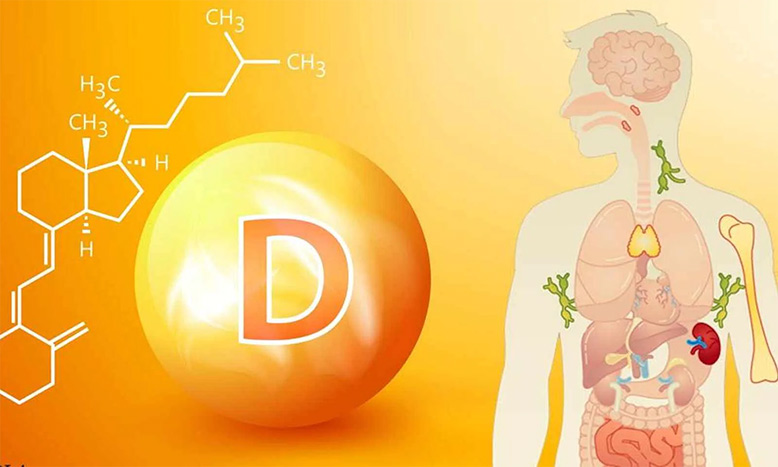
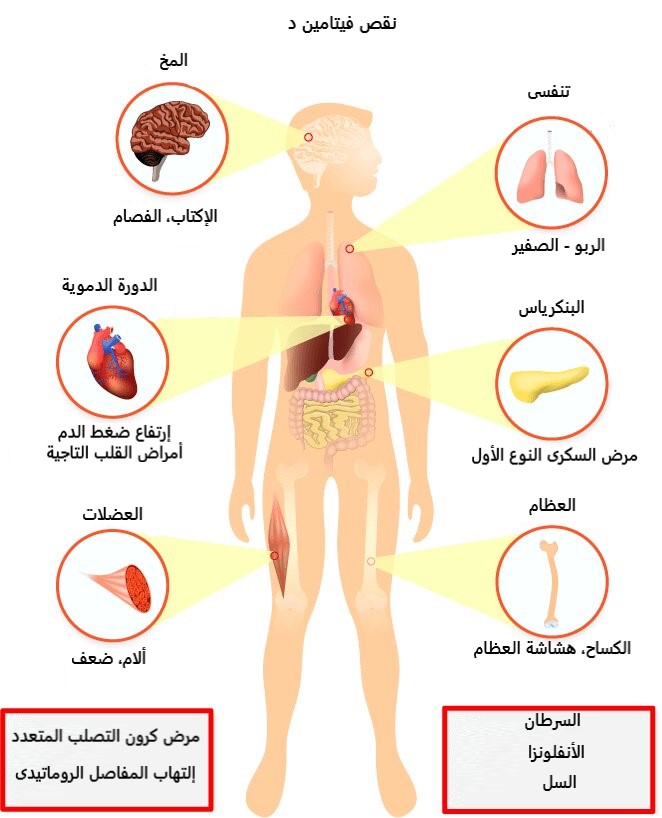
It's a fat-soluble vitamin that has long been known to help the body absorb and retain calcium and
phosphorus, both are
critical for building bone.
Also, laboratory studies show that vitamin D can reduce cancer cell growth, help control infections and
reduce
inflammation.
Many of the body’s organs and tissues have receptors for vitamin D, which suggest important roles beyond
bone health,
and scientists are actively investigating other possible functions.
Few foods naturally contain vitamin D, though some foods are fortified with the vitamin.
For most people, the best way to get enough vitamin D is taking a supplement because it is hard to eat
enough through
food.
Vitamin D supplements are available in two forms: vitamin D2 (“ergocalciferol” or pre-vitamin D) and vitamin
D3
(“cholecalciferol”).
Both are also naturally occurring forms that are produced in the presence of the sun’s ultraviolet-B (UVB)
rays, hence
its nickname, “the sunshine vitamin,” but D2 is produced in plants and fungi and D3 in animals, including
humans.
Vitamin D level world widely
Recommended Daily Amount (RDA): For adults 19 years and older is 600 IU daily for men and women, and for
adults >70
years it is 800 IU daily, This is for individuals with normal level of vitamin D.
An estimated 1 billion people have inadequate levels of vitamin D in their blood, and deficiencies can
be found in all
ethnicities and age groups.
In industrialized countries, doctors are seeing the resurgence of rickets, the bone-weakening disease
that had been
largely eradicated through vitamin D fortification.
The Institute of Medicine (IOM) released in November 2010 recommendations increasing the daily vitamin D
intake for
children and adults in the U.S. and Canada, to 600 IU per day.
Although some groups such as The Endocrine Society recommend 1,500 to 2,000 IU daily to reach adequate
serum levels of
vitamin D.
supports your body with 10,000 IU of Vitamin D3 the bioactive form of vitamin D, To enrich your body with
all the benefits of Vitamin D3 efficiently.
As mentioned before, Vitamin d is responsible for calcium and phosphorous in bone, which are the
building blocks of
bone.
Several studies link low vitamin D blood levels with an increased risk of fractures in older adults.
Some studies suggest that vitamin D supplementation in certain amounts may prevent such fractures.
12 randomized controlled trials that included more than 42,000 people 65+ years of age, most of them
women, looked at
vitamin D supplementation with or without calcium, and with calcium or a placebo.
Researchers found that higher intakes of vitamin D supplements - about 500-800 IU per day - reduced
hip and non-spine
fractures by about 20%, while lower intakes (400 IU or less) failed to offer any fracture prevention
benefit.
Vitamin D may help increase muscle strength by preserving muscle fibers, which in turn helps to
prevent falls, a common
problem that leads to substantial disability and death in older people.
A combined analysis of multiple studies found that taking 700 to 1,000 IU of vitamin D per day lowered
the risk of falls
by 19%, but taking 200 to 600 IU per day did not offer any such protection.
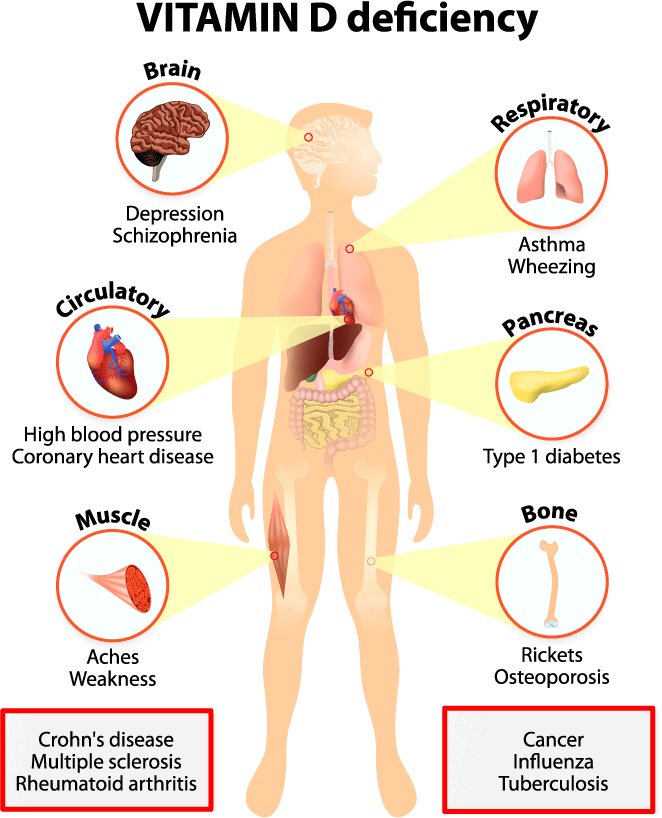
Here we are going to highlight the effect of Vitamin D intake and deficiency on some diseases:
The rate of multiple sclerosis (MS) is increasing in both developed and developing countries, with
an unclear cause.
A prospective study of dietary intake of vitamin D found women with daily intake above 400 IU
had
a 40% lower risk of
MS.
In a study among healthy young adults in the US, White men and women with the highest vitamin D
serum levels had a 62%
lower risk of developing MS than those with the lowest vitamin D levels.
Another prospective study in young adults from Sweden also found a 61% lower risk of MS with
higher serum vitamin D
levels.
And a prospective study among young Finnish women found that low serum vitamin D levels were
associated with a 43%
increased risk of MS.
This conclusion has been strengthened substantially by recent evidence that genetically determined
low levels of vitamin
D predict higher risk of multiple sclerosis.
Early evidence suggesting that vitamin D may play a role in T1D comes from a 30-year study that
followed more than
10,000 Finnish children from birth.
Children who regularly received vitamin D supplements during infancy had a nearly 90% lower risk
of
developing type 1
diabetes than those who did not receive supplements.
Approximately 40% of T1D cases begin in adulthood.
A prospective study among healthy young adults in the US found that White individuals with the
highest levels of serum
vitamin D had a 44% lower risk of developing T1D in adulthood than those with the lowest levels.
More research is needed in this area.
Vitamin D deficiency may negatively affect the biochemical pathways that lead to the development
of
Type 2 diabetes
(T2DM), including impairment of beta cell function in the pancreas, insulin resistance, and
inflammation.
Prospective observational studies have shown that higher vitamin D blood levels are associated
with
lower rates of T2DM.
More than 83,000 women without diabetes at baseline were followed in the Nurses’ Health Study for
the development of
T2DM.
Vitamin D and calcium intakes from diet and supplements were assessed throughout the 20-year
study.
The authors found that when comparing the women with the highest intakes of vitamin D from
supplements with women with
the lowest intakes, there was a 13% lower risk of developing T2DM.
The effect was even stronger when vitamin D was combined with calcium: there was a 33% lower risk
of
T2DM in women when
comparing the highest intakes of calcium and vitamin D from supplements (> 1,200mg, > 800 IU
daily) with the lowest
intakes (< 600 mg, 400 IU).
Vitamin D levels are lowest in the winter months.
The active form of vitamin D tempers the damaging inflammatory response of some white blood
cells,
while it also boosts
immune cells’ production of microbe-fighting proteins.
Children who have vitamin D-deficiency rickets are more likely to get respiratory infections,
while children exposed to
sunlight seem to have fewer respiratory infections.
Adults who have low vitamin D levels are more likely to report having had a recent cough, cold,
or
upper respiratory
tract infection.
Although randomized controlled trials exploring the potential of vitamin D to prevent other
acute
respiratory infections
have yielded mixed results, a large meta-analysis of individual participant data indicated that
daily or weekly vitamin
D supplementation lowers risk of acute respiratory infections.
The findings from this large meta-analysis have raised the possibility that low vitamin D levels
may also increase risk
of or severity of novel coronavirus 2019 (COVID-19) infection.
Although there is no direct evidence on this issue because this such a new disease, avoiding low
levels of vitamin D
makes sense for this and other reasons.
Thus, if there is reason to believe that levels might be low, such as having darker skin or
limited sun exposure, taking
a supplement of 1000 or 2000 IU per day is reasonable.
This amount is now part of many standard multiple vitamin supplements and inexpensive.
The Vitamin D and Omega 3 trial (VITAL), a randomized double-blind placebo-controlled trial
following more than 25,000
men and women ages 50 and older, found that taking vitamin D supplements (2,000 IU/day) for five
years, or vitamin D
supplements with marine omega-3 fatty acids (1,000 mg/day), reduced the incidence of autoimmune
diseases by about 22%,
compared with a placebo.
Autoimmune conditions observed included rheumatoid arthritis, psoriasis, polymyalgia rheumatica,
and
autoimmune thyroid
diseases (Hashimoto’s thyroiditis, Graves’ disease).
The doses in these supplements are widely available and generally well-tolerated.
The authors recommended additional trials to test the effectiveness of these supplements in
younger
populations and
those at high risk of developing autoimmune diseases.
The heart is basically a large muscle, and like skeletal muscle, it has receptors for vitamin D.
Immune and inflammatory cells that play a role in cardiovascular disease conditions like
atherosclerosis are regulated
by vitamin D.
The vitamin also helps to keep arteries flexible and relaxed, which in turn helps to control high
blood pressure.
In the Health Professionals Follow-up Study nearly 50,000 healthy men were followed for 10 years.
Those who had the lowest levels of vitamin D were twice as likely to have a heart attack as men who
had the highest
levels.
Meta-analyses of epidemiological studies have found that people with the lowest serum levels of
vitamin D had a
significantly increased risk of strokes and any heart disease event compared with those with the
highest levels.
If you purchase vitamin D supplements, you may see two different forms.
Vitamin D2 and vitamin D3. Vitamin D2 is made from plants and is found in fortified foods and some
supplements.
Vitamin D3 is naturally produced in the human body and is found in animal foods.
There is ongoing debate whether vitamin D3 “cholecalciferol” is better than vitamin D2 “ergocalciferol” at
increasing
blood levels of the vitamin.
A meta-analysis of randomized controlled trials that compared the effects of vitamin D2 and D3 supplements
on blood
levels found that D3 supplements tended to raise blood concentrations of the vitamin more and sustained
those levels
longer than D2.
Some experts cite vitamin D3 as the preferred form as it is naturally produced in the body and found in
most foods that
naturally contain the vitamin.
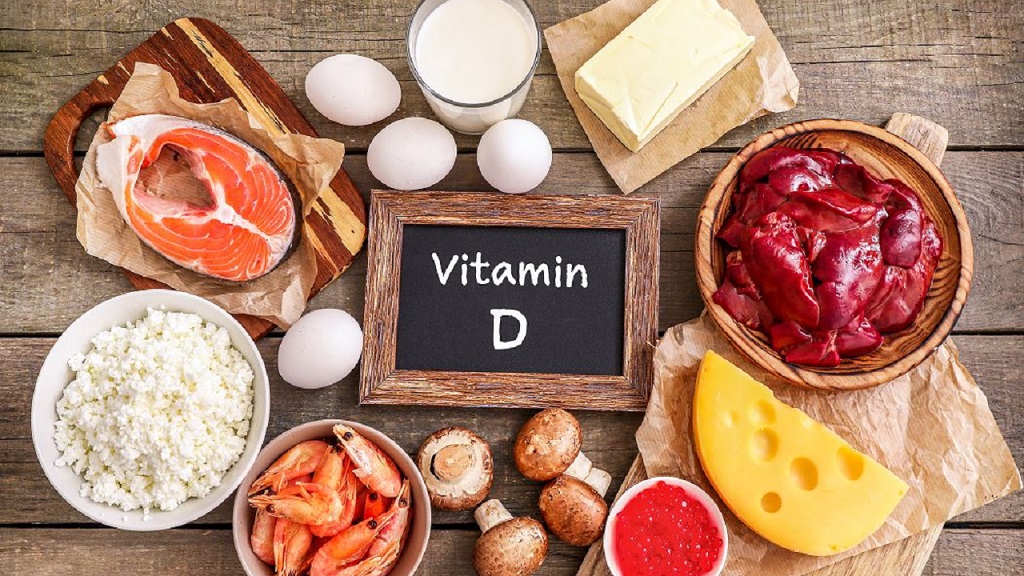
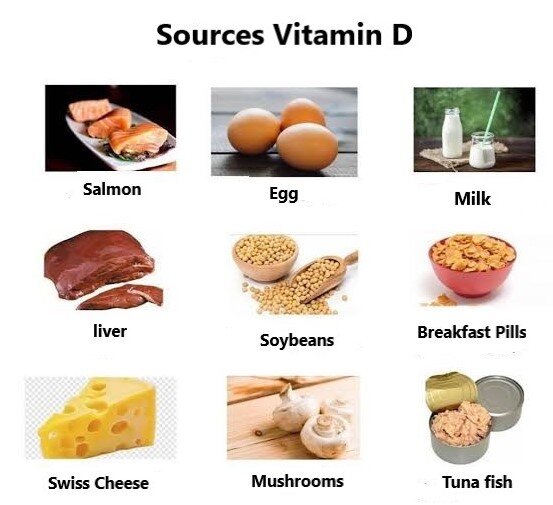
Few foods are naturally rich in vitamin D3.
The best sources are the flesh of fatty fish and fish liver oils.
Smaller amounts are found in egg yolks, cheese, and beef liver.
Certain mushrooms contain some vitamin D2; in addition, some commercially sold mushrooms contain higher
amounts of D2
due to intentionally being exposed to high amounts of ultraviolet light.
Many foods and supplements are fortified with vitamin D like dairy products and cereals.
Cod liver oil
Salmon
Swordfish
Tuna fish
Orange juice fortified with vitamin D
Dairy and plant milks fortified with vitamin D
Sardines
Beef liver
Egg yolk
Fortified cereals
Vitamin D3 can be formed when a chemical reaction occurs in human skin, when a steroid called
7-dehydrocholesterol is
broken down by the sun’s UVB light or so-called “tanning” rays.
The amount of the vitamin absorbed can vary widely.
The following are conditions that decrease exposure to UVB light and therefore lessen vitamin D
absorption:
Use of sunscreen; correctly applied sunscreen can reduce vitamin D absorption by more than 90%.
Wearing full clothing that covers the skin.
Spending limited time outdoors.
Darker skin tones due to having higher amounts of the pigment melanin, which acts as a type of natural
sunscreen.
Older ages when there is a decrease in 7-dehydrocholesterol levels and changes in skin, and a population
that is likely
to spend more time indoors.
Note that catching the sun’s rays in a sunny office or driving in a car unfortunately won’t help to obtain
vitamin D as
window glass completely blocks UVB ultraviolet light.
Note that because ultraviolet rays can cause skin cancer, it is important to avoid excessive sun exposure
and in
general, tanning beds should not be used.
Vitamin D deficiency may occur from a lack in the diet, poor absorption, or having a metabolic need
for higher amounts.
If one is not eating enough vitamin D and does not receive enough ultraviolet sun exposure over an
extended period, a
deficiency may arise.
People who cannot tolerate or do not eat milk, eggs, and fish, such as those with a lactose
intolerance or who follow a
vegan diet, are at higher risk for a deficiency.
Other people at high risk of vitamin D deficiency include:
People with inflammatory bowel disease (ulcerative colitis, Crohn’s disease) or other conditions that
disrupt the normal
digestion of fat.
Vitamin D is a fat-soluble vitamin that depends on the gut’s ability to absorb dietary fat.
People who are obese tend to have lower blood vitamin D levels. Vitamin D accumulates in excess fat
tissues but is not
easily available for use by the body when needed.
Higher doses of vitamin D supplementation may be needed to achieve a desirable blood level.
Conversely, blood levels of vitamin D rise when obese people lose weight.
People who have undergone gastric bypass surgery, which typically removes the upper part of the small
intestine where
vitamin D is absorbed.
Conditions resulting from prolonged vitamin D deficiency:
Rickets: A condition in infants and children of soft bones and skeletal deformities caused by failure
of bone tissue to
harden.
Osteomalacia: A condition in adults of weak and softened bones that can be reversed with
supplementation.
This is different than osteoporosis, in which the bones are porous and brittle and the condition is
irreversible.
Vitamin D toxicity most often occurs from taking uncontrolled doses of supplements.
The low amounts of the vitamin found in food are unlikely to reach a toxic level, and a high amount of
sun exposure does
not lead to toxicity because excess heat on the skin prevents D3 from forming.
Symptoms of toxicity:
Anorexia
Weight loss
Irregular heart beat
Hardening of blood vessels and tissues due to increased blood levels of calcium, potentially leading
to damage of the
heart and kidneys.